

Why Learn SEO: Practical Skills for Modern Search
In brief: Learning SEO helps you understand how websites are discovered, interpreted and improved for real search needs. Those skills remain useful across traditional search results, local search and AI-assisted discovery.
SEO is broader than adding keywords
Modern SEO connects website structure, useful content, search intent, internal links, local visibility and measurement. It also requires judgement: deciding which problem matters, which recommendation is realistic and whether a change genuinely helps the user.
The same foundations support visibility in Google’s AI features. Google does not require special “AI SEO” files or secret optimisation methods; pages still need to be accessible, indexable, useful and understandable.
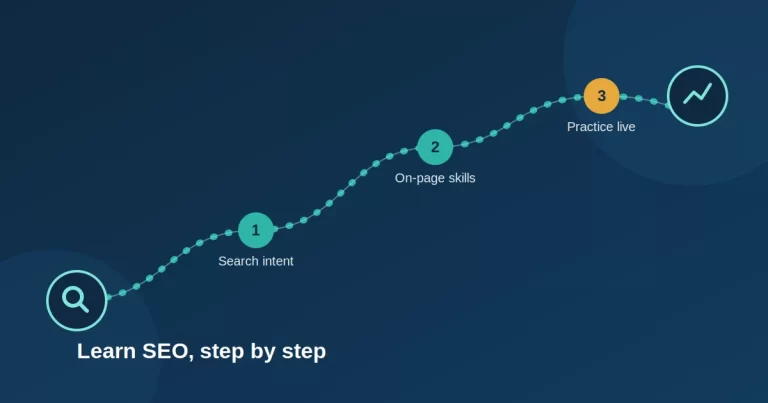
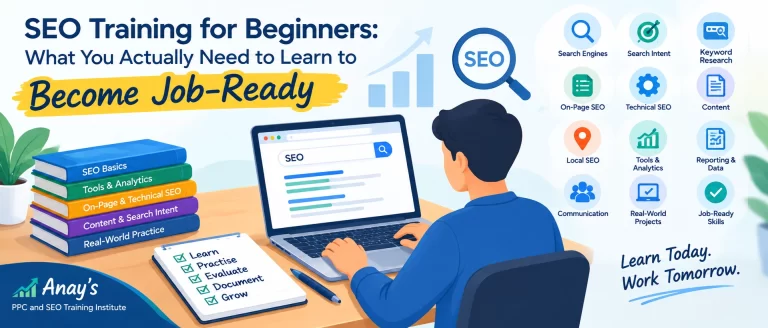
Practical skills you can learn
- How search engines crawl, index and present web pages.
- How to research a topic and understand the purpose behind a search.
- How to improve titles, headings, copy, links, images and page structure.
- How technical choices can help or restrict discovery.
- How local businesses can manage their website and Google Business Profile responsibly.
- How to use Search Console, analytics and other evidence to assess progress.
- How to use AI for research and assistance while checking accuracy, originality and context.
Why these skills remain relevant
Search interfaces will continue to change. People may discover information through standard results, maps, summaries, assistants or other answer-led experiences. The labels may include SEO, AEO, GEO or related terms, but the durable work remains clear: publish trustworthy information, make it technically accessible and help systems understand its meaning.
Learning principles is therefore more valuable than memorising a checklist. A good learner should be able to examine a new search feature, understand what has actually changed and adapt without chasing every new acronym.
Who can benefit from learning SEO?
SEO training can help students, business owners, marketers, content professionals, developers and people preparing for entry-level search work. It can also help someone who simply wants to make better decisions about their own website or supervise external support.
It does not promise a job, a ranking or instant business growth. Practice, judgement, communication and continued learning still matter.
Learn by working through real decisions
My live online SEO training focuses on practical understanding, guided exercises and adaptable discussion. The curriculum can respond to a trainee’s starting level while retaining the core concepts needed for responsible work.
Frequently asked questions
Is SEO still worth learning when search uses AI?
Yes. AI-assisted results still depend on discoverable, understandable and useful web information. The interface may change, but strong technical and content foundations remain relevant.
Do I need coding knowledge before learning SEO?
No. Basic web concepts are useful, and technical understanding can grow during practice. Many important SEO decisions involve content, structure, evidence and communication rather than programming.
Can an SEO course guarantee employment?
No responsible course should guarantee employment. Training can build practical skills and confidence, but outcomes also depend on practice, opportunity and the learner’s wider abilities.
Will AI tools do all SEO work for me?
No. They can assist with research, drafting and analysis, but they can also be incomplete or wrong. Human review, first-hand context and accountability remain necessary.



Good
Awesome
Good
Very good
Good
Good
Good
Trust was my biggest worry before trying this site but they completely won me over. The verification process is smooth and I never worry about my account safety. I love how they support local payment methods so deposits are instant. Feels like a neighborhood spot that actually cares about its regulars.