What Should a Proper On-Page SEO Strategy Actually Include?
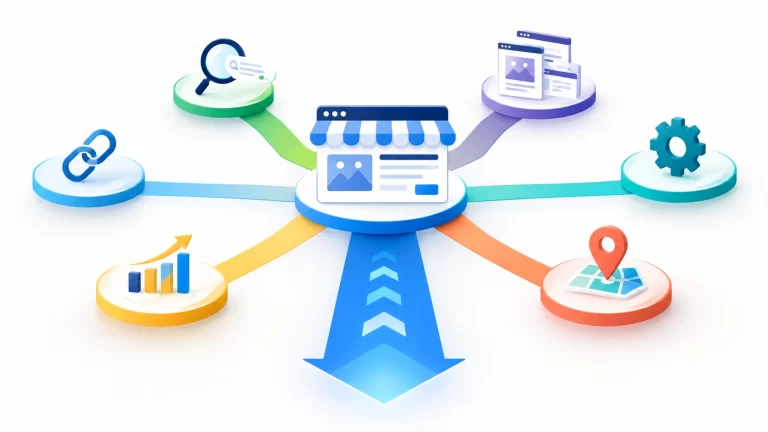
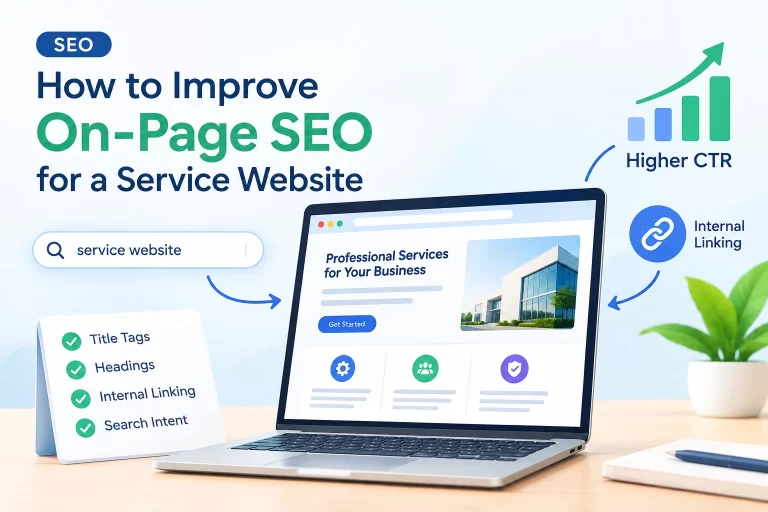
A proper on-page SEO strategy goes beyond adding keywords to titles and paragraphs. It connects search intent, content relevance, heading structure, internal links, images, URLs and user experience so each page serves a clear purpose. Understanding how these elements work together helps website owners identify meaningful improvements rather than rely on isolated SEO checklist items.
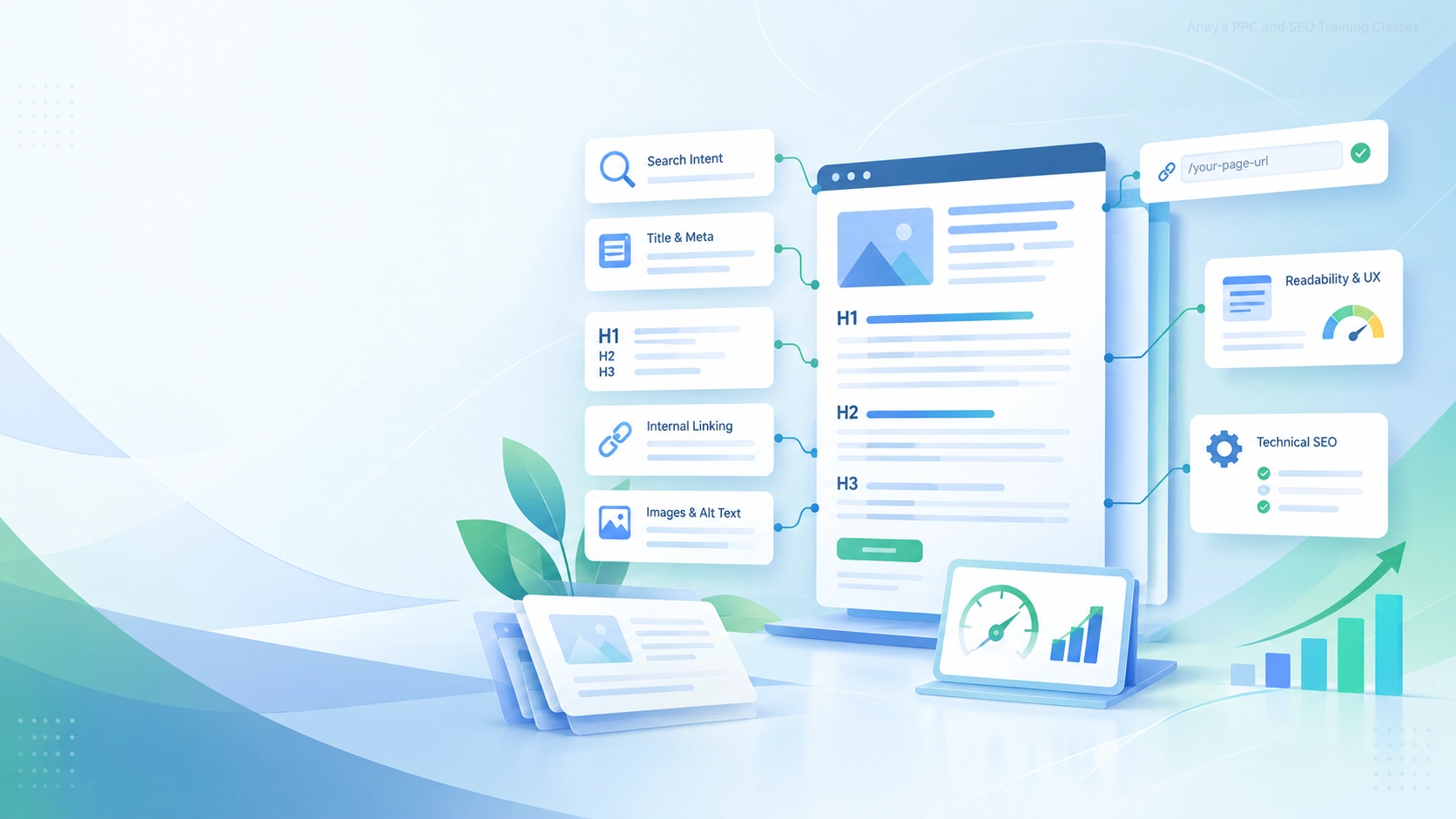
A proper on-page SEO strategy helps a webpage answer a searcher’s needs clearly. It covers search intent, title tags, headings, useful content, internal links, image optimisation, URL structure and readability. These elements work together to make a page relevant and understandable, while technical SEO helps search engines access, process and index it.
If you’ve looked into on-page SEO before, you’ve probably run into two very different versions of it. One treats it as a short checklist — add a keyword to your title, stuff a couple more into your paragraphs, done. The other treats it as something closer to how your page actually communicates with both people and search engines: what it’s trying to answer, how clearly it says so, and whether everything on the page backs that up.
The second version is the one that actually holds up. On-page SEO isn’t a set of isolated tricks you apply to a finished page. It’s a series of decisions — about intent, structure, content and internal linking — that should all point the same direction. Get those decisions right and the page has a real shot at ranking for something it deserves to rank for. Get them wrong, and no amount of keyword insertion is going to fix it.
Here’s what a proper on-page SEO strategy should actually include, and why each part matters on its own.
Start With Search Intent, Not Keywords
Before you touch a single tag, you need to know what someone typing that search term is actually trying to do. Are they comparing options? Trying to understand a concept? Ready to buy or enquire? A page built around the right keyword but the wrong intent rarely performs, no matter how well-optimised it looks on paper.
This is the step most checklist-style advice skips entirely, and it’s the one that actually determines whether everything that follows makes sense. If your page is answering “what is on-page SEO” but the searcher wants to hire someone to do it, you’ve optimised the wrong page for the right keyword.
Title Tags and Meta Descriptions
Your title tag is often the first thing a searcher sees, and it needs to do two things at once: tell them clearly what the page is about, and give them a reason to click over a competing result. The same logic applies to your meta description — it’s not a ranking factor in the way people used to assume, but it directly shapes whether someone chooses your result.
Neither of these should be treated as a keyword slot to fill in. A title tag that reads naturally and accurately represents the page tends to outperform one that’s been mechanically stuffed with variations of the same phrase.
Heading Structure That Actually Reflects the Content
Your H1, H2s and H3s aren’t decoration — they’re a map. A clear heading structure helps a reader scan the page and find what they need, and it helps search engines understand how your content is organised. One H1 that states what the page is about, followed by headings that break the topic into logical sections, usually does more for both readability and relevance than any amount of keyword repetition.
Where this tends to go wrong is when headings are written for search engines instead of readers — vague, keyword-heavy phrases that don’t actually tell anyone what the section covers. If a heading wouldn’t make sense read aloud to a person, it’s probably not helping either audience.
Content That’s Genuinely Relevant and Complete
This is where a lot of on-page SEO advice gets uncomfortably close to “just add more words.” Length isn’t the goal — coverage is. A page should answer the questions someone with that search intent would reasonably have, in enough depth that they don’t need to bounce back to the results and try somewhere else.
That means looking honestly at what your page currently covers versus what a reader in that position would actually want to know, and closing the real gaps rather than padding the page to hit a word count.
Internal Linking
Internal links do two jobs: they help visitors find related, useful pages, and they help search engines understand which pages on your site matter most and how they relate to each other. A page that’s never linked to from anywhere else on your site is sending a quiet signal that it isn’t very important — even if the content itself is solid.
The goal isn’t to link everywhere possible. It’s to connect pages where the link genuinely helps the reader move to their next logical step, using anchor text that describes the destination rather than repeating the same exact phrase every time.
Images, Filenames and Alt Text
Images are part of on-page SEO too, and they’re often the most neglected part. Descriptive filenames and genuinely useful alt text help search engines understand what an image shows, and alt text specifically matters for accessibility — it’s read aloud by screen readers, so it needs to describe the image, not just repeat your target keyword.
Beyond that, image file size affects page speed, which touches on-page SEO indirectly through user experience and Core Web Vitals. It’s a smaller piece of the puzzle, but it’s one that’s easy to get right and often gets skipped.
URL Structure
A clean, descriptive URL that reflects the page’s topic is easier for both people and search engines to understand at a glance. It doesn’t need to contain every target keyword — it needs to be readable, reasonably short, and consistent with how the rest of your site is structured. Changing an established URL later carries its own risks, so it’s worth getting this right from the start rather than optimising it after the fact.
Page-Level UX and Readability
Search engines are increasingly good at picking up on how usable a page actually is, but honestly, this matters for a simpler reason first: if your page is hard to read, visitors leave, and no amount of on-page optimisation recovers that. Paragraph length, font size, mobile responsiveness, and whether the page is cluttered with intrusive elements all affect whether someone actually reads what you wrote.
CTA Alignment
Your call to action should match where the reader actually is in their decision. A page written for someone doing early research shouldn’t push a hard “buy now” CTA — it’ll feel out of step with what the reader needs, and it tends to underperform anyway. On-page SEO isn’t just about getting found; it’s about what happens once someone’s there, and a mismatched CTA undoes a lot of the work that got them to the page in the first place.
How On-Page SEO Relates to Technical SEO
It’s worth being clear about where on-page SEO ends and technical SEO begins, because the two get conflated a lot. On-page SEO is about the content and structure of an individual page — what’s written, how it’s organised, what it links to. Technical SEO is about the underlying infrastructure that lets search engines crawl and index that page in the first place: site speed, crawlability, indexation, structured data, and so on.
A page can be beautifully optimised on-page and still underperform if there’s a technical issue preventing it from being properly crawled or indexed. The two work together, and neither one substitutes for the other.
If you’re not sure where your site currently stands, a broader review can help you identify what needs attention before diving into page-by-page optimisation. Start with what a proper website SEO audit should check, or explore our SEO audits and consulting service.
Optimisation Isn’t Keyword Insertion
If there’s one thing worth taking away from all of this, it’s that on-page SEO was never really about keywords in the narrow sense. It’s about making sure a page clearly, accurately and usefully addresses what someone came looking for — and making sure every element on that page, from the title tag to the internal links, supports that same purpose rather than working against it.
Done properly, it’s less a checklist and more a set of connected decisions that reflect how the page is actually meant to be used. If you’d like a second opinion on how your own pages are holding up against that standard, explore our On-Page SEO Services, Contact Us, or Call.